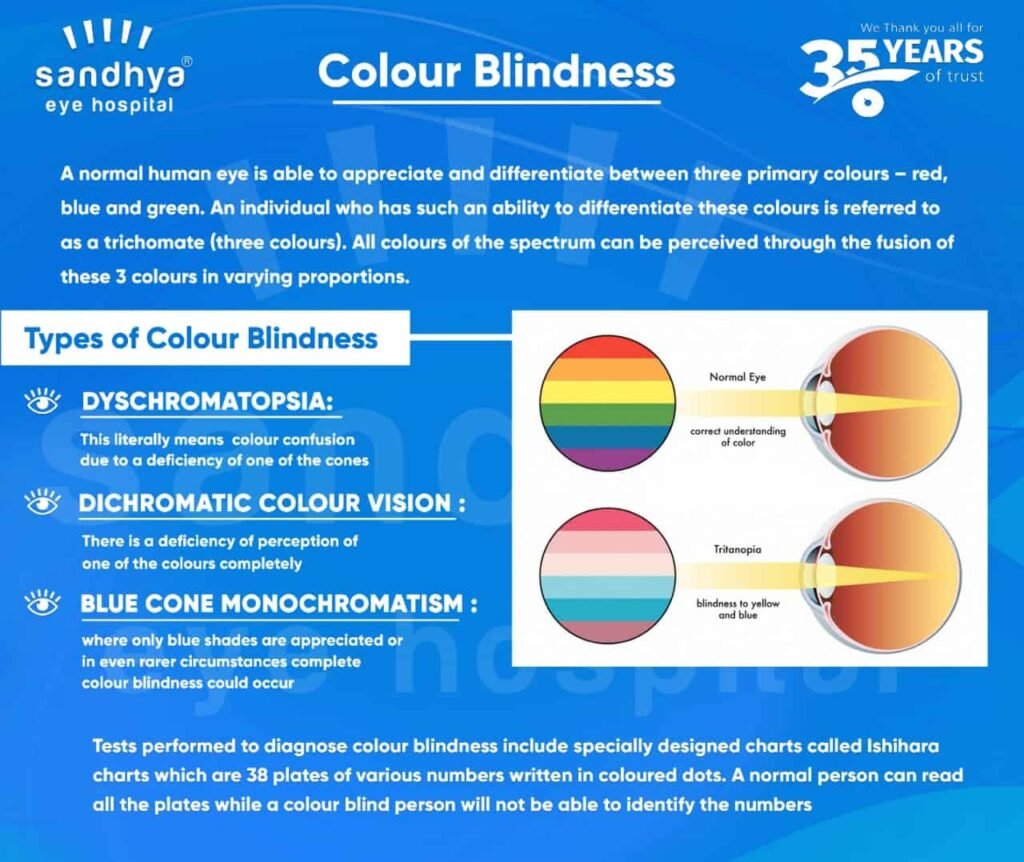
A normal human eye is able to appreciate and differentiate between three primary colours – red, blue and green. An individual who has such an ability to differentiate these colours is referred to as a trichomate (three colours). All colours of the spectrum can be perceived through the fusion of these 3 colours in varying proportions. Such a phenomenon is possible because our eyes contain a type of cell called cones at the back of the eye in a region called retina. Cones are cells which aide us in color vision and vision in well-lit conditions. There are three types of cones for this very purpose: red sensitive, blue sensitive and green sensitive. People who have abnormal amounts or quality of any of these cones are said to be color blind.
Contrary to popular belief, colour blind people are able to see colours, they just have trouble mainly in differentiating the colours when placed next to each other. Most cases of colour blindness is due to genetics and are hereditary. Males are ten times as likely to be colour blind as females.