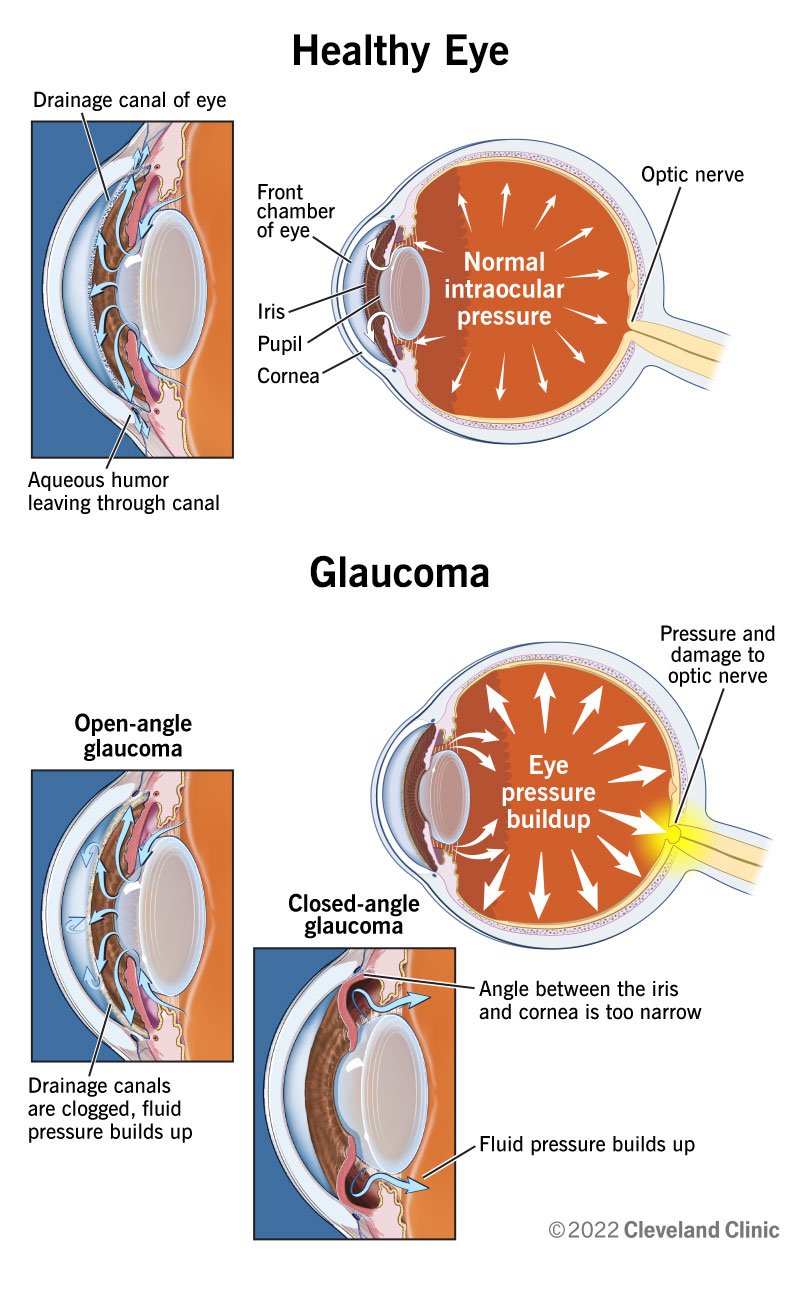
Glaucoma is a group of disorders which damage the optic nerve, the nerve associated with relaying information from the eye to the brain. It usually occurs due to an increase in the pressure of the eye but can sometime occur even with normal pressure. The eye is made up of two chambers; the anterior (the chamber in front) is called the aqueous chamber and the posterior (the one behind) is called the vitreous chamber. The human eye constantly keeps producing a fluid called aqueous humour into the anterior chamber, to increase the pressure of the eye and prevent it from collapsing. This pressure is called intraocular pressure (IOP).
Depending on the nature of increase in the pressure of the eye, glaucoma is broadly classified into two types:
- Open angle glaucoma: Angle here refers to the angle of the drainage canal for the aqueous humor being produced in the eyes. In this type of glaucoma the access to the drain is not blocked but other factors like hereditary causes can increase the pressure in the eye.
- Closed angle glaucoma: As the name suggests the drainage canal angle is narrow and blocks the drainage of the fluid produced. This causes back pressure to build up and cause damage to the optic nerve.
The real danger in open angle glaucoma lies in the fact that it is silent and rarely causes symptoms. This is really perilous as the damage done on the optic nerve is permanent and cannot be reversed. Therefore this disease needs to be caught and managed early. Glaucoma is the second most leading cause of blindness in the developed world!