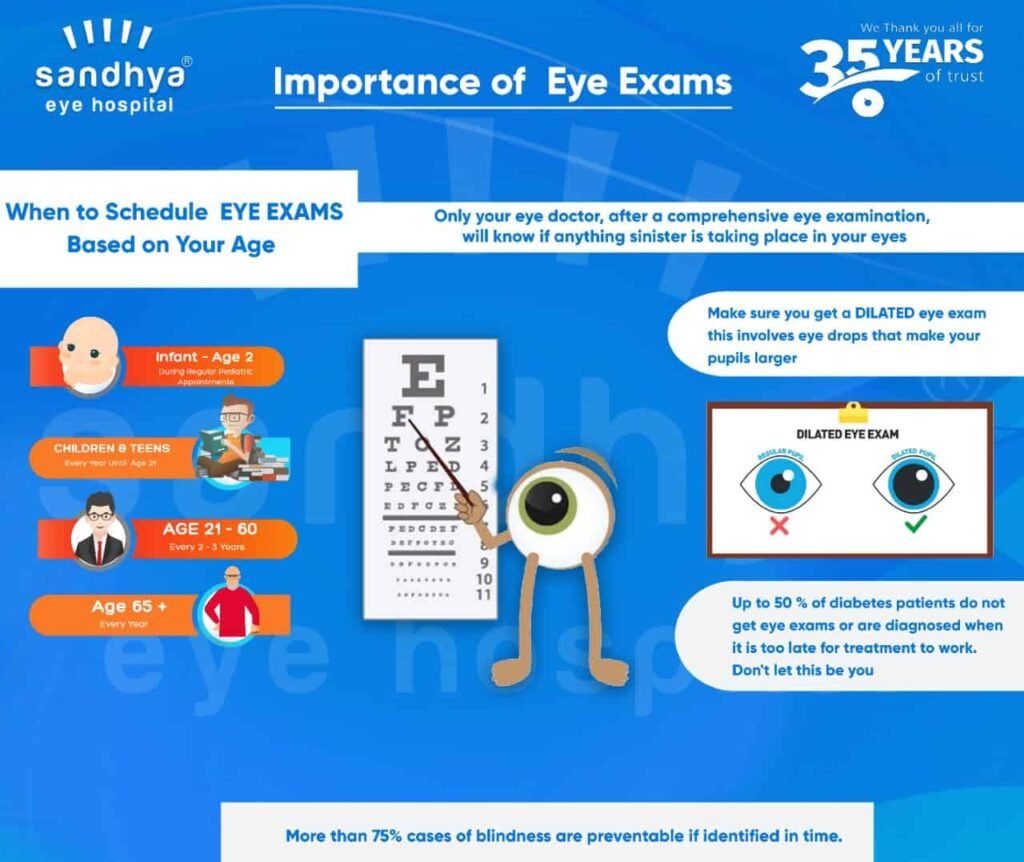
What does an eye exam entail?
Most eye exams test for visual sharpness, the proper perception of depth, alignment of the eyes, and eye movement. Before the exam starts, eye drops are used to make pupils larger. This way, your eye doctor can look inside your eyes and check for any health problems. He or she can also spot other conditions, such as hypertension (high blood pressure) or even diabetes. Occasionally, even before your primary care doctor!
Only your eye doctor, after a comprehensive eye examination, will know if anything sinister is taking place in your eyes. As many eye diseases are silent with next to no symptoms, uncovering such pathologies early makes a huge difference before permanent visual loss sets in!
A licensed doctor will use your eye evaluation to detect any early eye changes that can lead to problems later including:
- Cataracts, a condition where the lens of the eye becomes cloudy, resulting in blurred vision. Timely identification of cataracts and appropriate management which includes replacing the lens is of paramount importance to prevent vision loss.
- Retinal detachment, a type of medical emergency which can lead to total blindness if it isn’t treated within an approppriate time. Early spotting of any such development during regular eye examinations can help the doctors take required steps to prevent it from happening.
- Glaucoma, a condition which occurs due to increased pressure in your eyes. It can be a silent disease with next to no symptoms but can cause permanent visual loss if not treated.
- Age-related macular degeneration, a condition which leads to gradual breakdown of light-sensitive tissue in the eye. This can also be detected early and appropriate action can be taken.
Apart from diagnosing early eye pathologies, a look into the vessels of the eye can give the doctor vital information about various systemic (body) conditions such as:
- Diabetes: Diabetic retinopathy, one of the leading causes of blindness in the world is identified by blood vessels in the retina of the eyes leaking blood or yellow fluid. For those with diabetes, a yearly eye exam is extremely important, to protect their eyesight and eye health.
- Hypertension: If there are any bends or tears in the blood vessels inside the eye, it may indicate high blood pressure.
- High cholesterol: A light yellow ring around the cornea can indicate high cholesterol.
- Thyroid disease: Those that have bulging (protruding) eyeballs could have underlying thyroid problems.
- Cancer: Any unusualness in the structure of the eye could be an indication of eye cancer (ocular melanoma), and those in the eyelids can mean skin cancer (basal cell carcinoma).
More than 75% cases of blindness are preventable if identified in time.