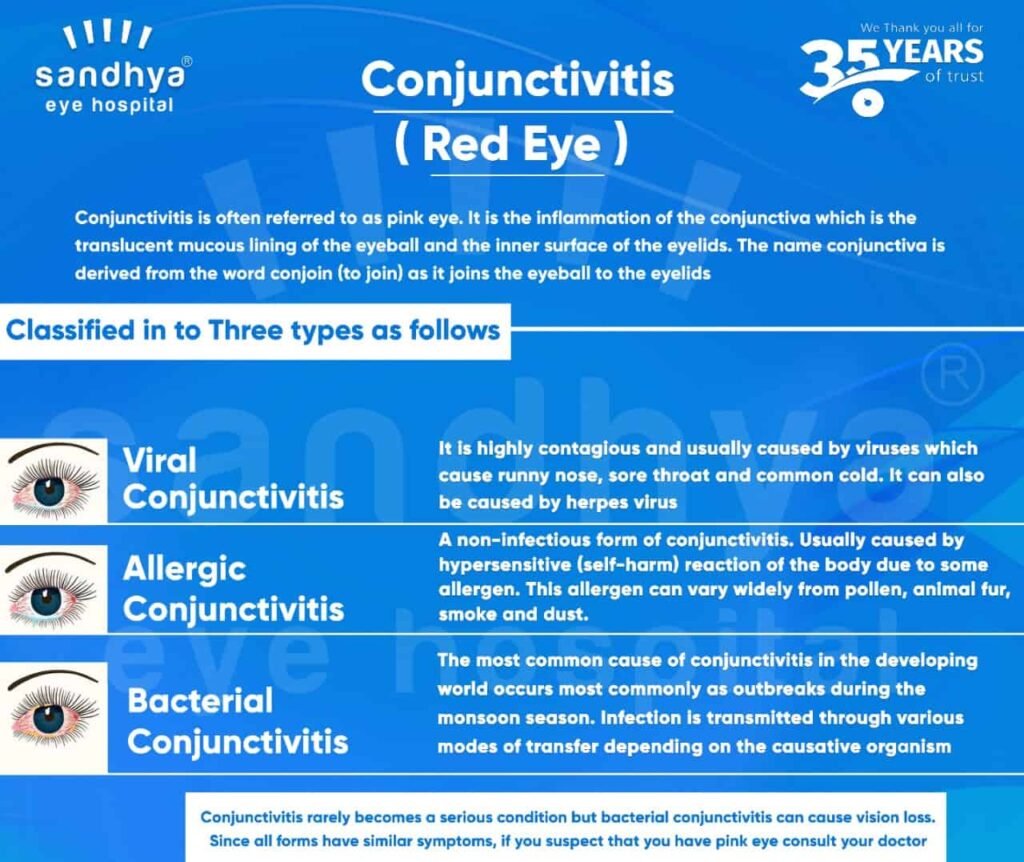
Symptoms of pink eye depend on the type of conjunctivitis you may be suffering from but usually include:
- Discomfort in the eye (sensation of grittiness)
- Foreign body sensation in the eye
- Blurring of vision
- Redness in the eyes
- Discharge from the eye which could be watery in allergic and viral conjunctivitis, to pus filled in bacterial kind
- Itchy sensation of the eyes
- Watering of the eyes
- Pain in the eye in bacterial conjunctivitis
- Puffiness of the eyelids when the inner surface is involved.
- Increased sensitivity to light
- Sticking of the eyelids together during the night when they are shut together for prolonged periods of time.
Treatment of pink eye depends mainly on the type of pink eye a person is suffering from:
- Bacterial conjunctivitis is usually treated by your doctor by prescribing topical antibiotic drops. Usually antibiotic eye drops containing mild doses of chloramphenicol or gentamicin are used. Additional treatment includes washing of the eyes with sterile warm saline twice a day.
- Viral conjunctivitis unfortunately does not have any treatment options. But your body fights such viruses on its own. Symptomatic remedies are enough to reduce the discomfort caused during the period your body fights the virus.
- Allergic conjunctivitis is usually treated with anti-inflammatory drops which reduce the allergic reaction and help soothe the eyes.
- Apart from specific treatment, symptomatic treatment like applying a wet cloth to comfort your eyes and wearing dark goggles to reduce sensitivity to light also are beneficial.
Conjunctivitis rarely becomes a serious condition but bacterial conjunctivitis can cause vision loss. Since all forms have similar symptoms, if you suspect that you have pink eye consult your doctor so that they are able to diagnose the type of pink eye and give appropriate treatment and advice. Preventive measures include maintaining general hygiene, avoiding sharing towels and handkerchiefs and proper care if you are using contact lenses.